The road from $4M to $5M ARR
Five years in, a team of 11, and still fully bootstrapped.
Our form builder, Tally, just crossed $5M ARR, and as the tradition goes, here's a summary of what happened since our last update.
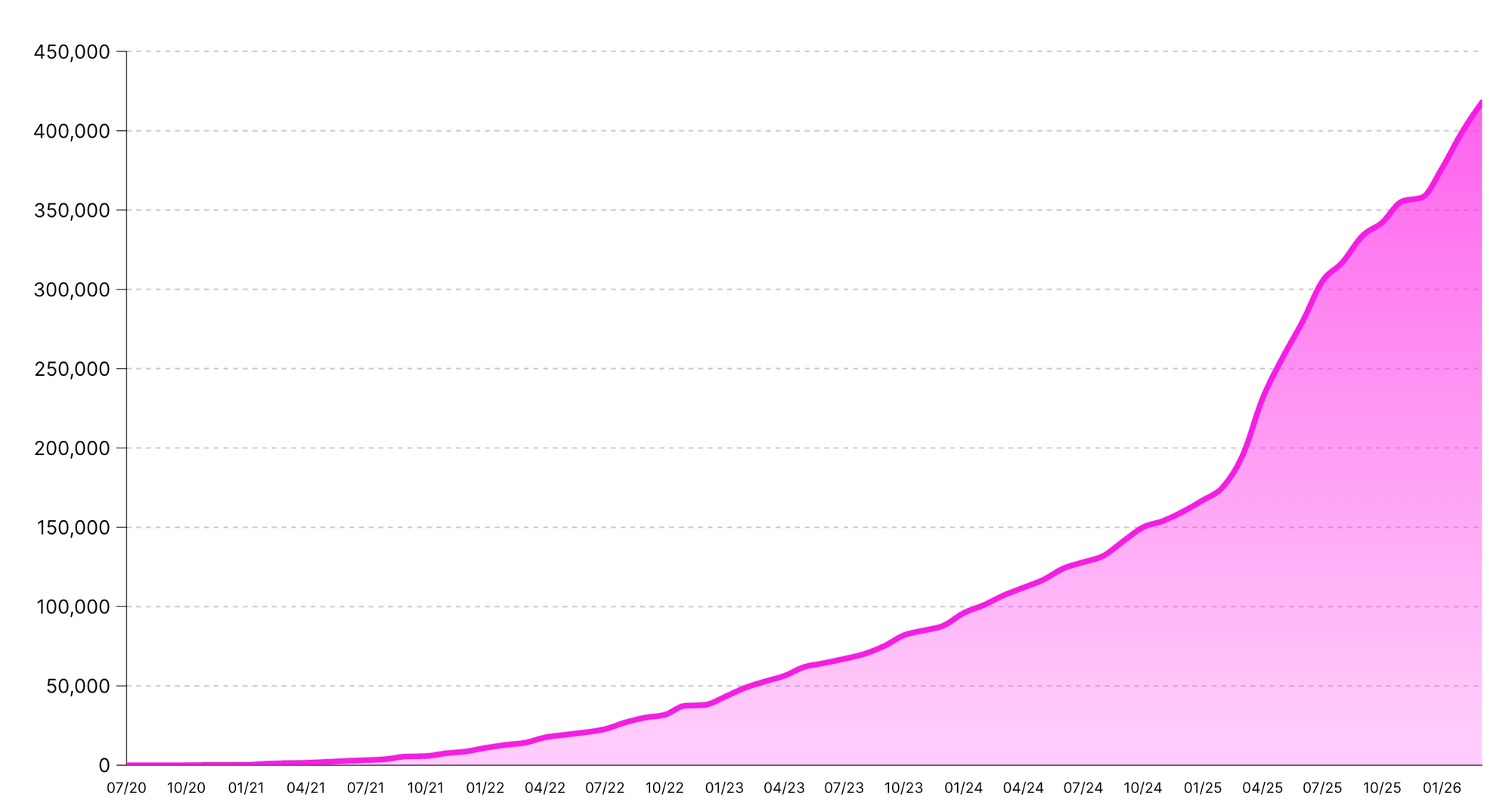
Tally is the simplest way to create forms, for free. We launched in 2020 and we’re a small, independent team based in Europe. We're customer-funded, and we care about the long term. About building something opinionated, focused, and something people genuinely love to use.
If you're new here, this is a recap of our journey building Tally:
| Sept. 2020 | $0K | How we ended up building a form builder |
| Mar. 2021 | $1K | From MVP to Product Hunt launch |
| Oct. 2021 | $5K | Bootstrapping to $5K MRR and 11K users |
| Dec. 2021 | $8K | Wrapping up 2021 |
| Feb. 2022 | $10K | Bootstrapping to $10K MRR and 20K users |
| Jun. 2022 | $20K | Growing from $10K to $20k MRR |
| Oct. 2022 | $30K | Bootstrapping our SaaS to $30K MRR |
| May 2023 | $60K | Bootstrapping our SaaS to $60K MRR |
| Sept. 2023 | $75K | Launching Tally 2.0 |
| Feb. 2024 | $100K | Bootstrapping to $100K MRR |
| Nov. 2024 | $150K | Bootstrapping to $150K MRR |
| Feb. 2025 | $175K | We crossed $2M ARR |
| June 2025 | $258K | From $2M to $3M ARR |
| October 2025 | $338K | From $3M to $4M ARR |
| January 2026 | $358K | Building a sustainable business |
| April 2026 | $422K | Here we are 📍 |
A quick recap: what we said we'd do
At the start of this year, we published a blog post that was a bit unusual for a milestone update. Instead of setting a revenue goal, we said we'd focus entirely on product quality. No revenue targets, but: make the product better, stay close to users, and trust that the rest would follow.
We followed through, and this post is about what we actually did, and learned, since January 2026.
How we listened
We set out to track product quality through multiple channels. Here's what that looked like in practice.
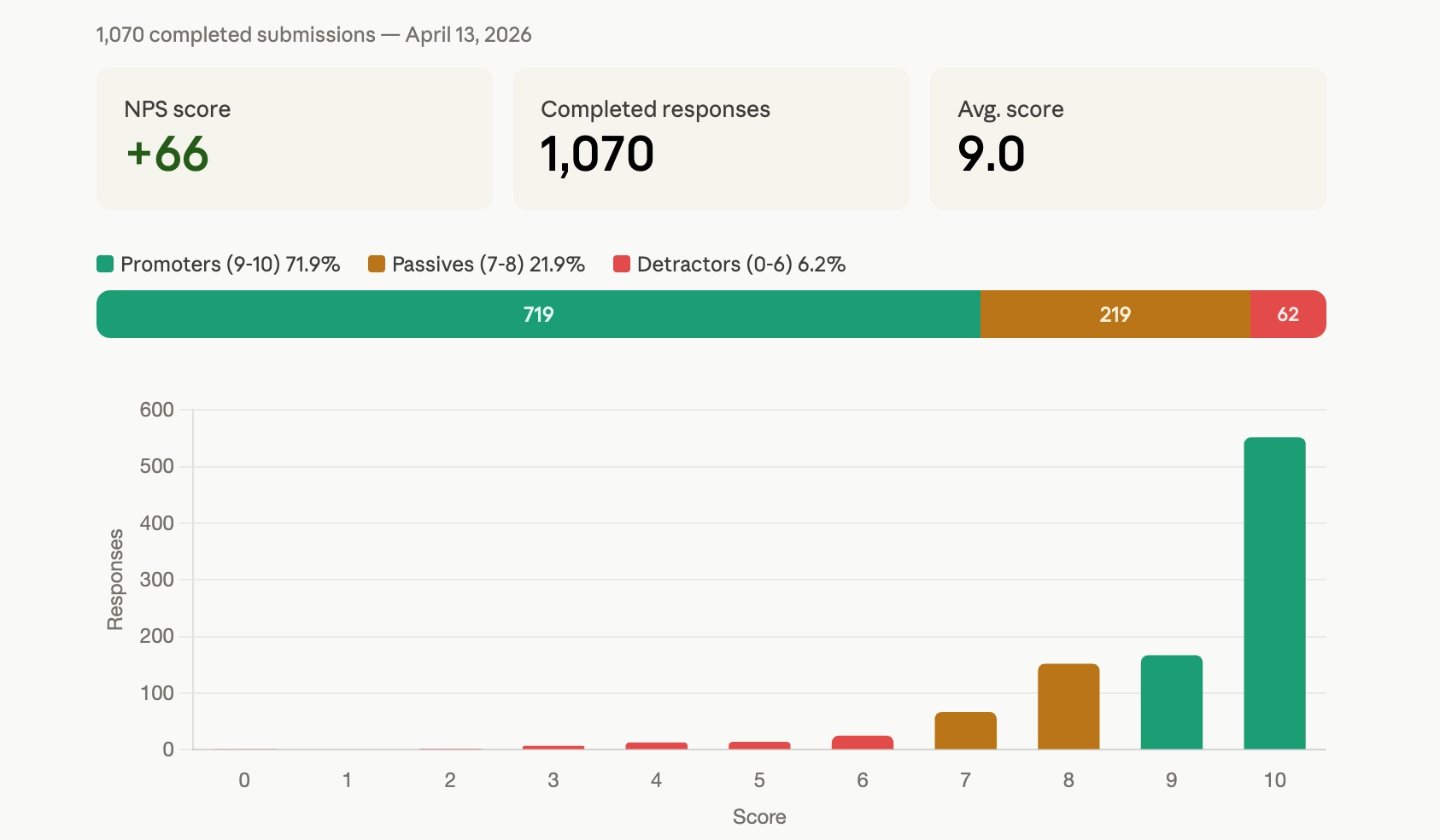
NPS survey
We ran our first quarterly NPS survey. Our score sits at 66, ideally we want it above 70 (which is an excellent NPS score).
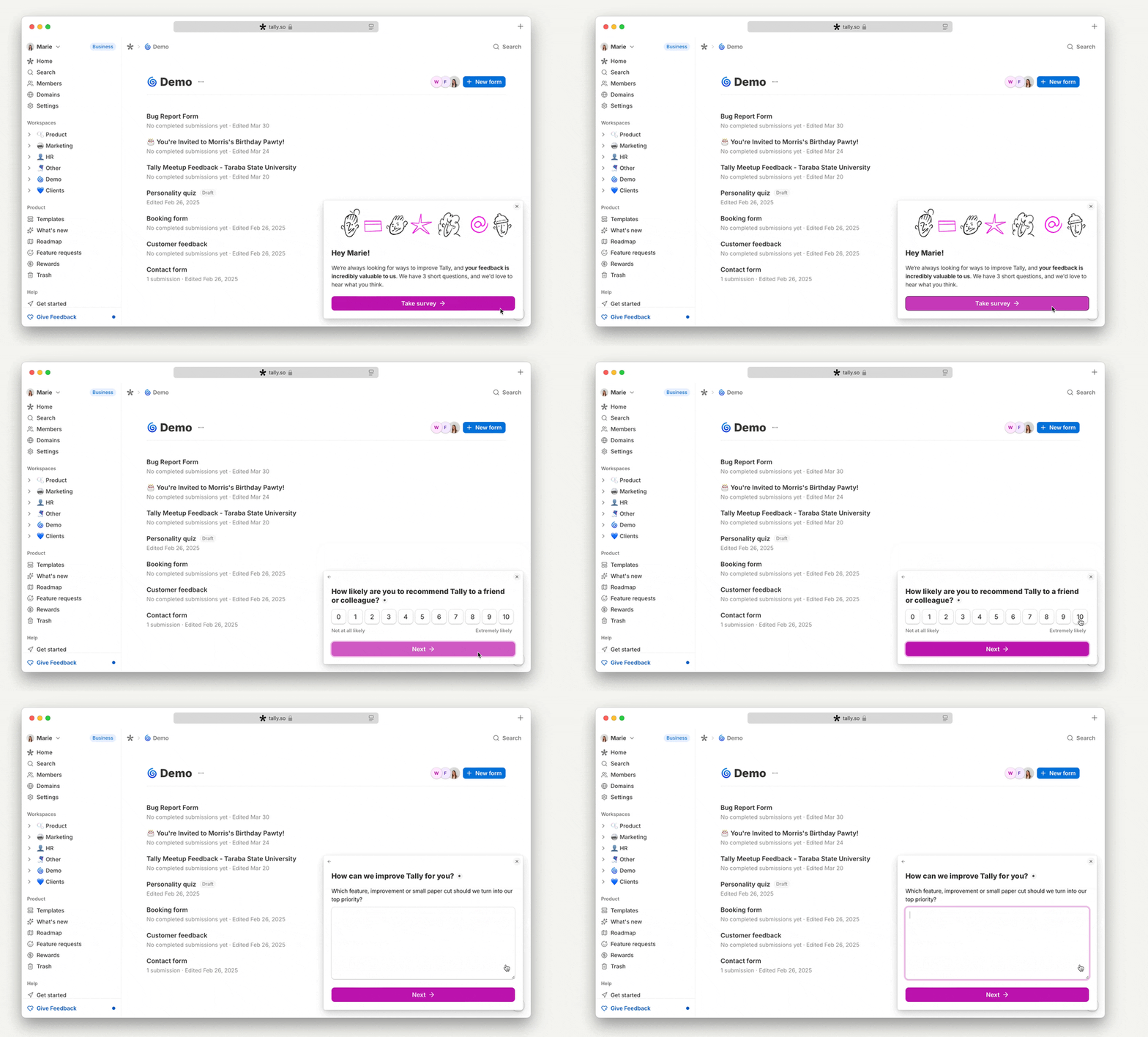
The number is useful, but the open-ended responses are where the real value is. They gave us a direct line to what people actually think and what they want us to improve. The priorities are clear and are being translated to our roadmap.
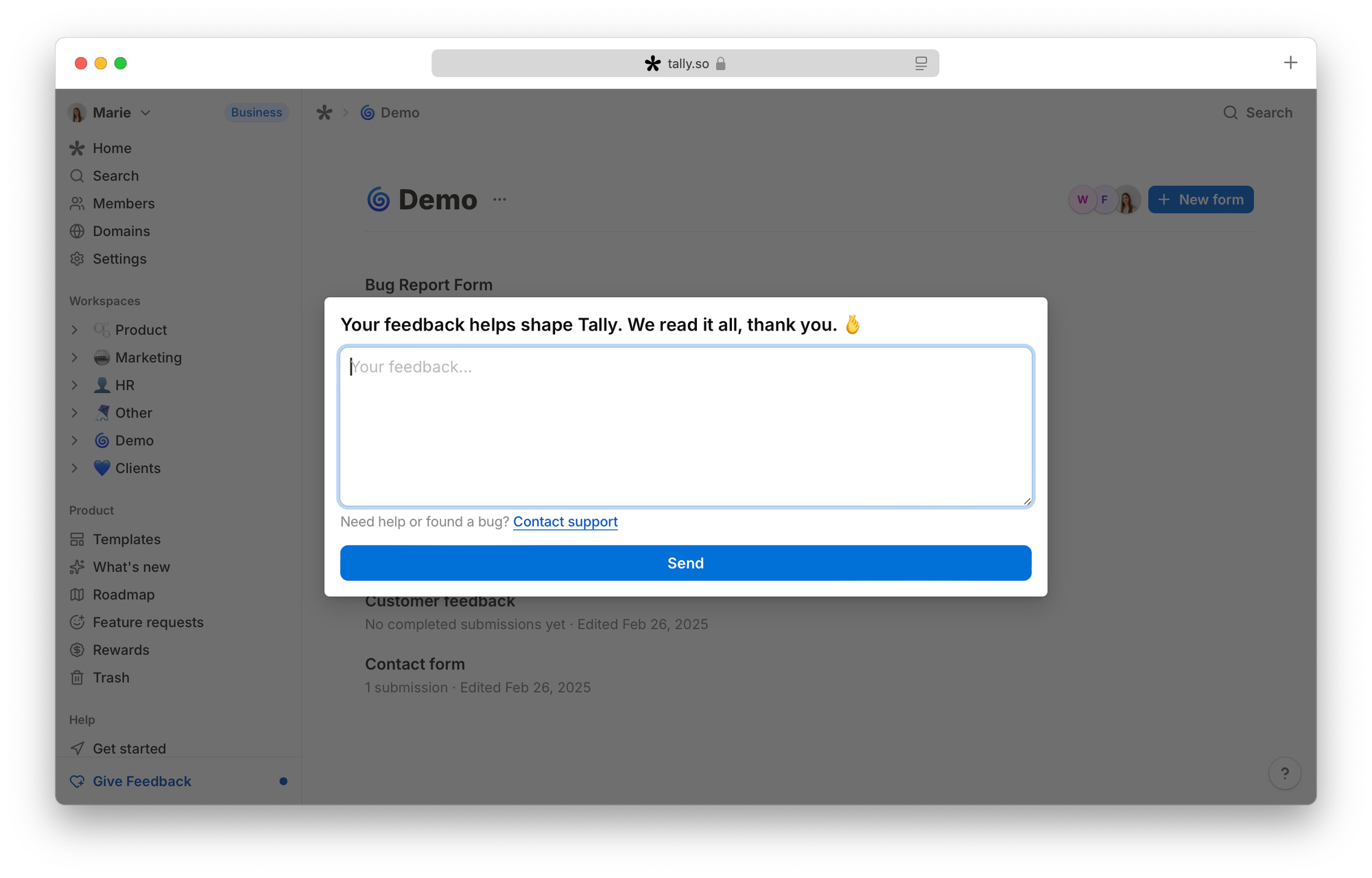
In-product feedback button
We added a feedback popup with one simple question. A quick way for anyone to share what's on their mind without leaving the product or contacting our support team.
Office Hours
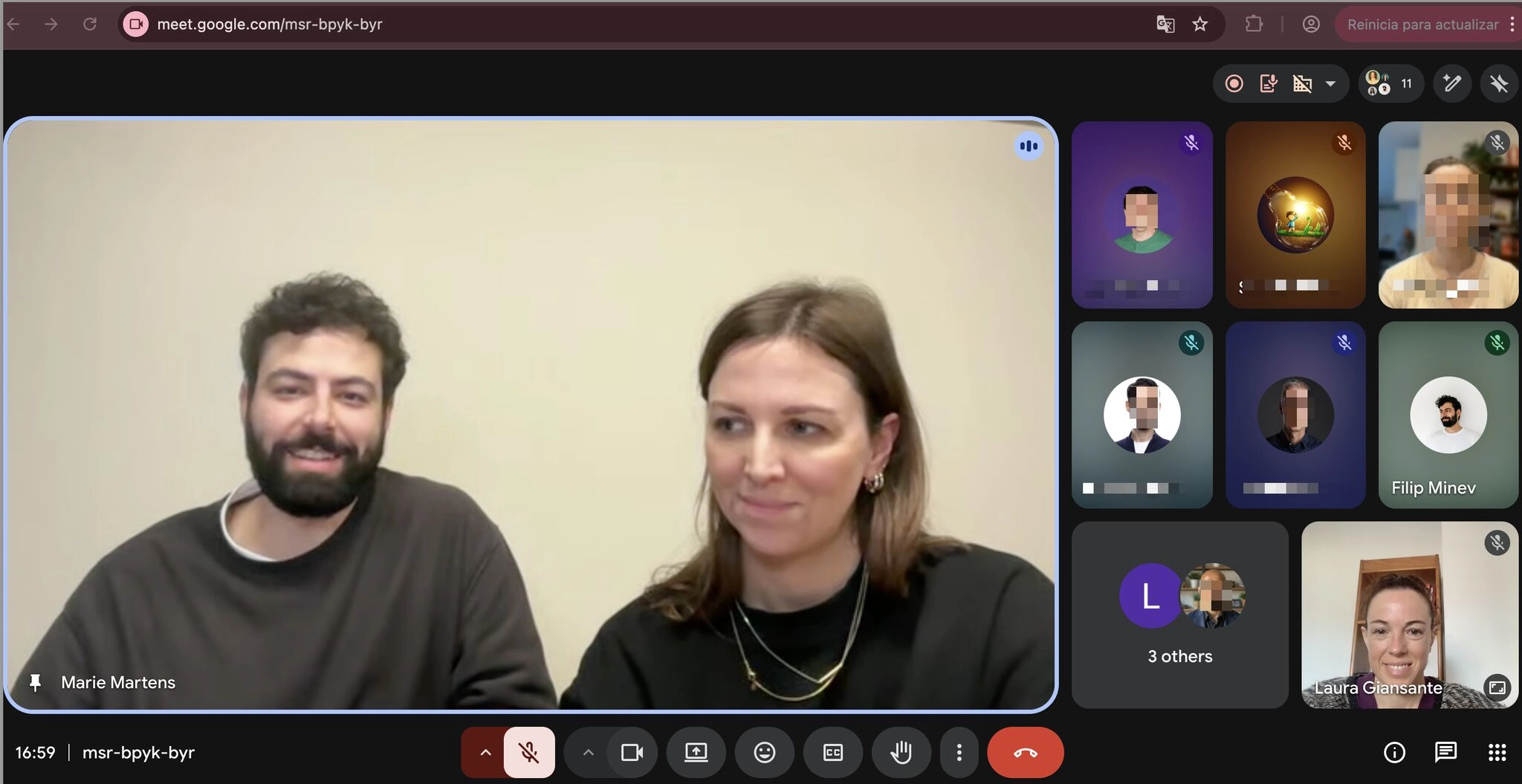
We started hosting live Office Hours: open calls where anyone can join and ask questions, share feedback, or just chat with Filip and me. No agenda, no slides, just open conversations and building together live.
We've done three so far and we're turning it into a monthly thing. Each session is an hour, capped at 40 people, and our goal is to ship at least one thing that was requested during Office Hours every month. It's one of the most fun and valuable things we've started doing. You hear things in a live conversation that you'd never get from a survey.
Feature requests
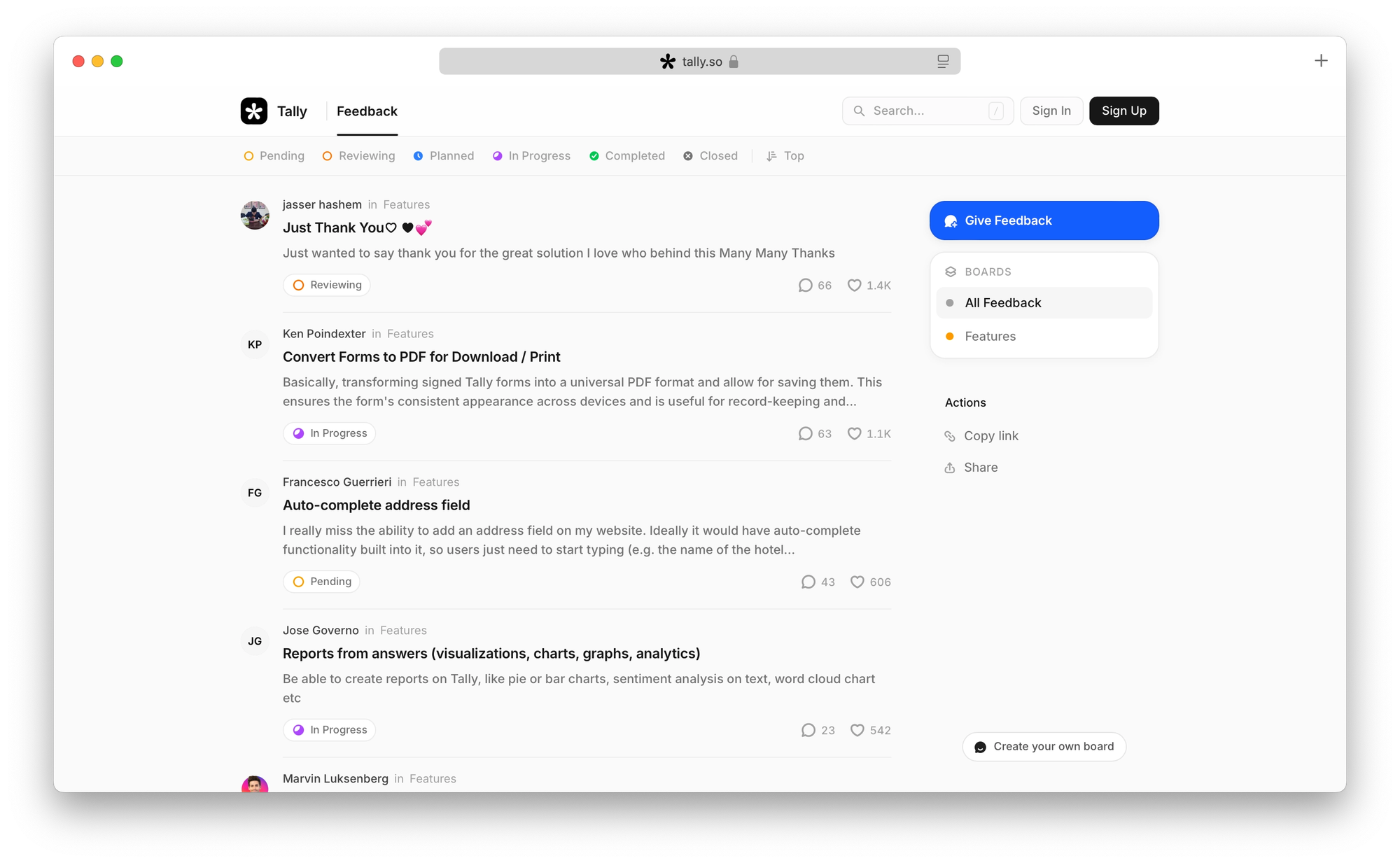
We used Canny for years to gather feature requests and got tons of value from their free plan. I've been following the founders and their building-in-public journey too (their blog is worth checking out). But when they moved to usage-based pricing (pay per tracked user), it meant an impossible price jump for us with over a million users. Enter UserJot, built by an indie hacker, beautifully made, at a fraction of the cost.
Reviews
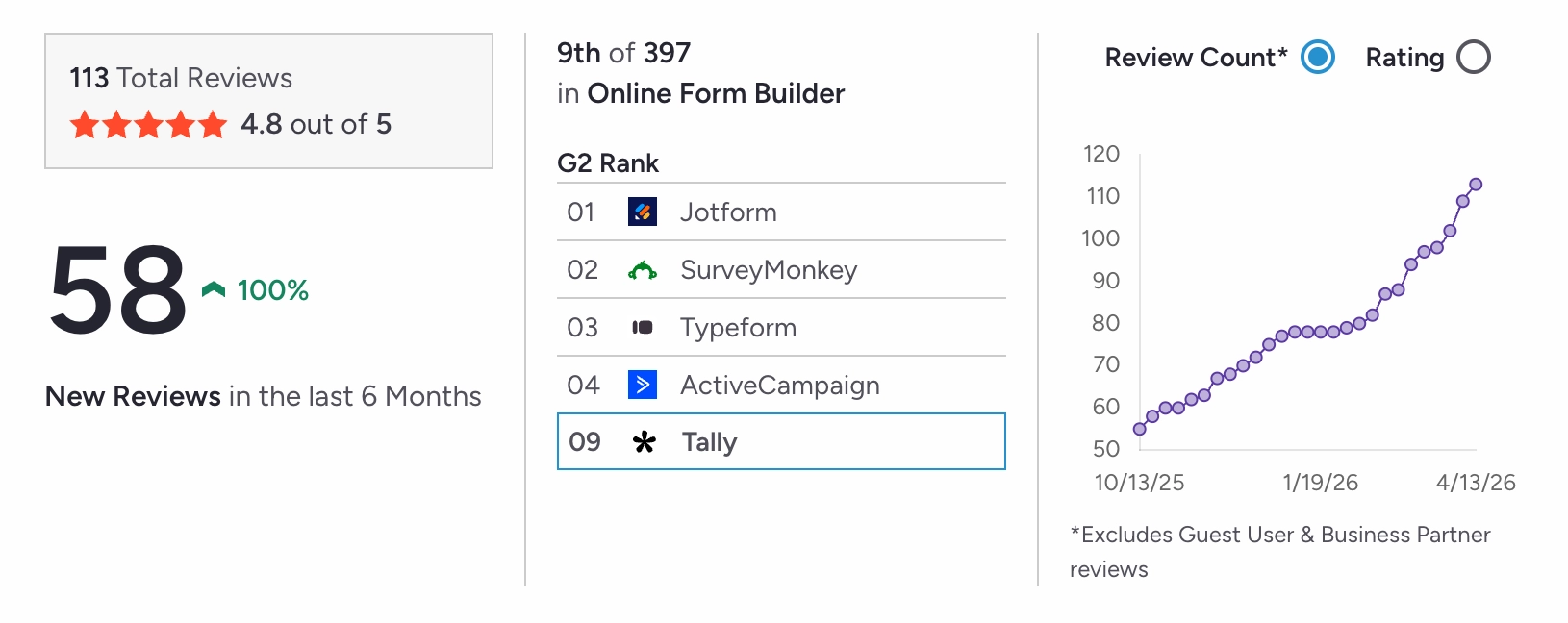
We've been growing our presence on G2 and Capterra. Reviews come in organically, and we ask for them in our monthly newsletter and when closing a support ticket.
Shared feedback Slack channel
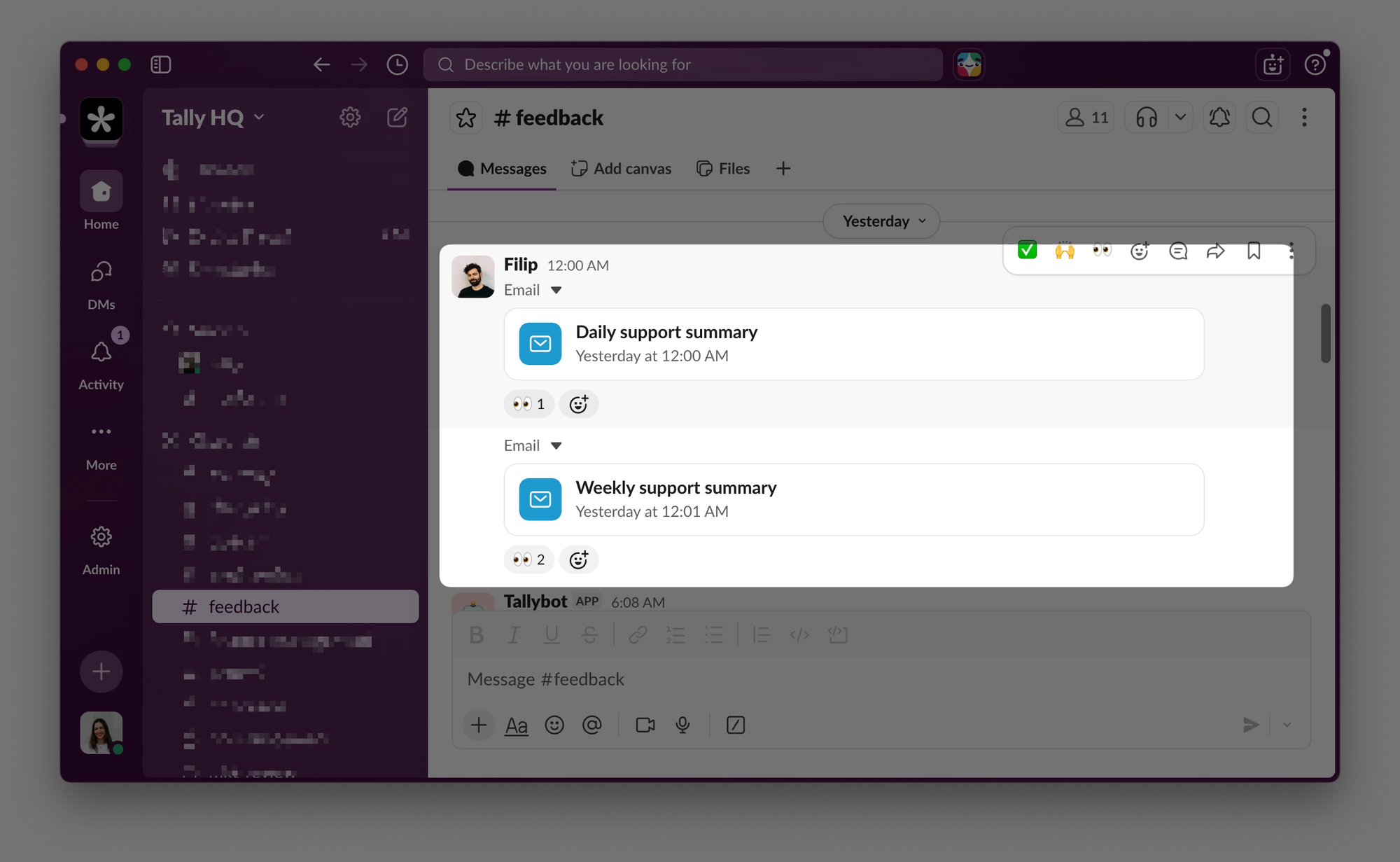
But the thing that's had the most impact isn't any single tool. It's what we do with all this feedback: we share everything with the entire team in a dedicated Slack channel. Every support ticket, every feedback button response, every review, every feature request. It all goes there. Everyone reads it, everyone has context.
What we shipped
When you optimize for quality, the changelog doesn't always look flashy. A lot of what we shipped these past few months won't make headlines. But it's exactly the kind of work we believe matters most.
Making the product easier to use. We improved the form builder experience on mobile, made longer forms easier to navigate with a table of contents, and improved conditional logic so complex forms are simpler to manage. We also made setting up custom domains less painful. Small things, but they add up.
Helping users get more out of their data. This was a long-time request. We've been building out form analytics (currently in beta): answer insights with distribution charts, so you can see how people respond at a glance.
Introducing AI that's actually useful. Tally AI can now set up simple conditional logic, handle answer piping through mentions, and configure default answers. We’re not turning into an AI form builder, but the focus is on making the tedious parts of form building disappear, such as building logic and calculations, so you can focus on the questions that matter. We also improved our Tally MCP server, which lets you connect AI tools like Claude, ChatGPT, or Cursor directly to your Tally account to build forms and analyze submissions through conversation.
And a lot of bug fixes. Because fixing small annoyances, smoothing rough edges, and squashing bugs is and remains our highest priority.
How we grew
Our playbook hasn't changed. We’re still growing organically through word of mouth and the "Made with Tally" badge. Tally is free to use with our branding enabled. People fill out a Tally form, see the badge, sign up. 2% of those users sign up for Tally Pro, which is how we grow. It's the same loop we've had since day one, and it keeps compounding.
What has changed, since last year, is that this viral loop is no longer our biggest acquisition channel. AI-powered search is. ChatGPT, Claude, Gemini, and AI Overviews continue to grow as referral sources.
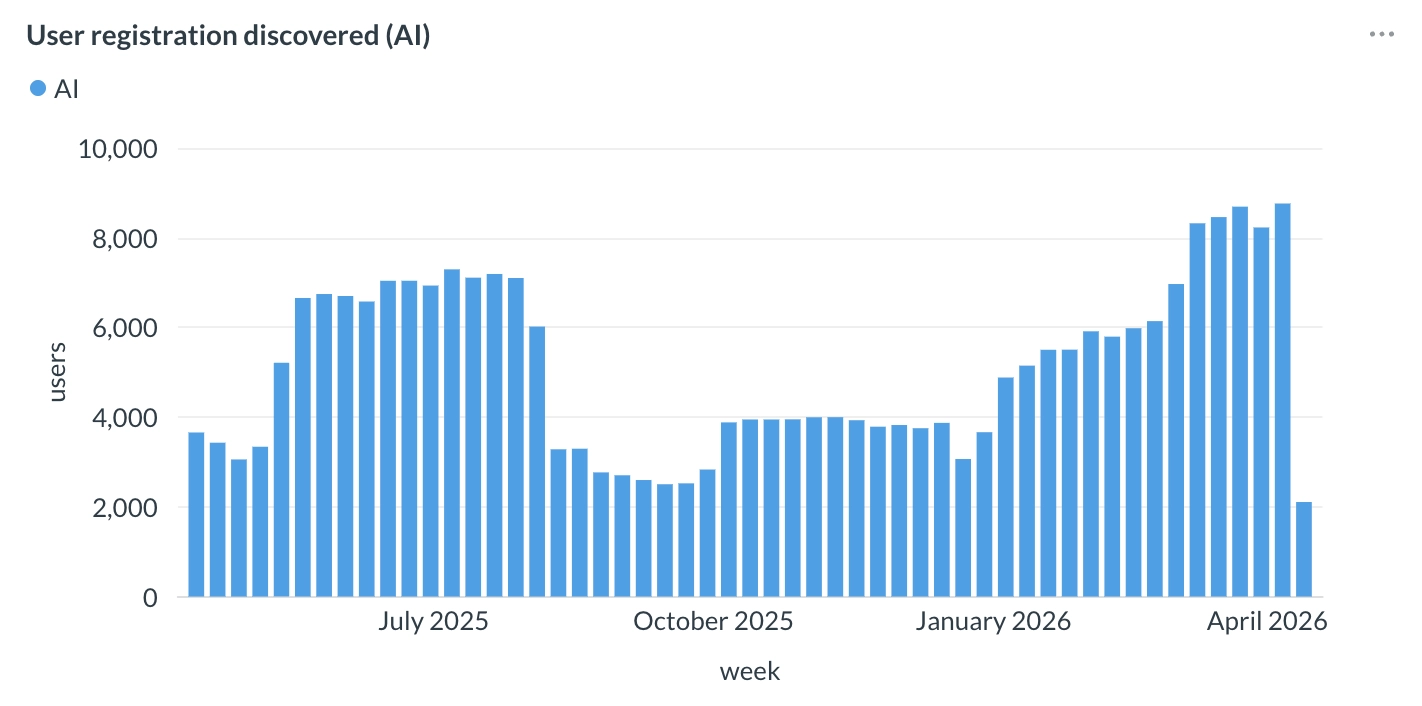
This graphs comes from our onboarding survey, where more and more users are telling us they found Tally through AI. Where our referrals used to come mostly from ChatGPT, Gemini and especially Claude is growing fast in the past months.
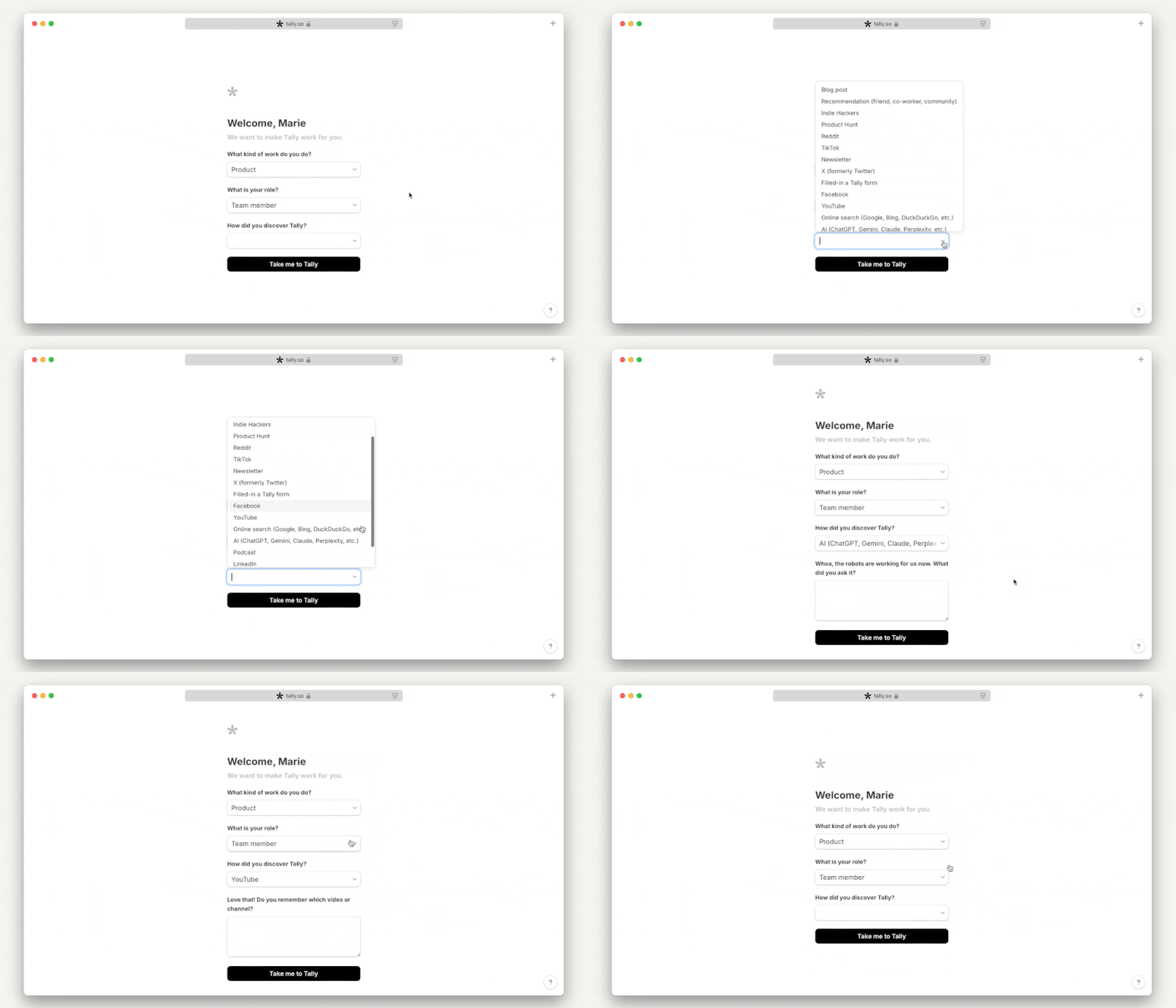
- which prompts people used when they found us via LLMs
- search terms that led them to us
- creators whose content actually converts
- niche communities or newsletters mentioning us
- podcasts where we were brought up
Both of these channels, word of mouth and AI search, are powered by the same thing: our community. Happy users sharing the word, recommending us on Reddit, supporting us online, and now even organizing meetups.
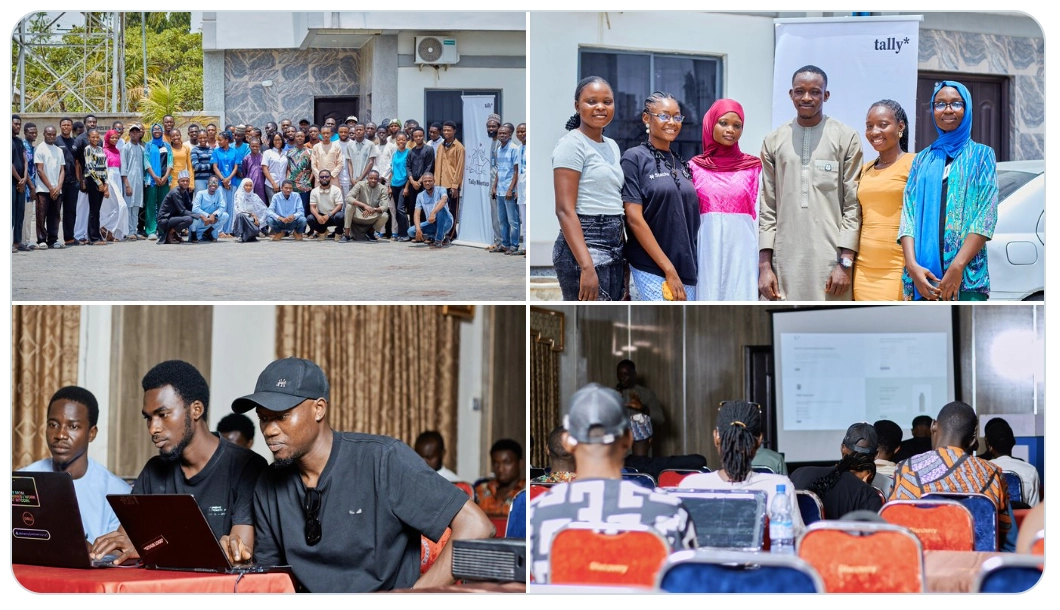
Our first-ever Tally meetup happened in Nigeria. A community member at Taraba State University organized it entirely on their own, running a session on data collection for an audience of students. A proud moment for the team!
The team
We grew from 10 to 11. We're still small by design, and we're in no rush to change that. Ward joined as our marketing manager, and he's already making an impact — you might have spotted him in our latest product announcements or in our MCP video.
We also introduced what we call Tally Monthlies: our only recurring (team) meeting at Tally. Once a month, the whole team gets together virtually to align on what we're working on, share updates, and stay connected. With part of the team working remotely, this is how we make sure everyone has context and feels part of the bigger picture.
What we've learned
Every milestone update, I try to share what's on my mind.
Focusing on quality is harder than it sounds. It's easy to say "we optimize for craft." It's harder to actually do it, every day, when there's a list of 200 things you could be building. The discipline isn't in working hard — it's in choosing what to ignore.
The things that compound are boring. Fixing bugs. Improving error messages. Making the UX a little smoother. Expanding the help center. None of this is exciting on its own. But the game is won by sticking to it consistently.
Not having a revenue goal is freeing, but also uncomfortable. When you don't track a revenue number, you lose a clear scoreboard. You have to trust your own judgment more, and actually listen to your users. Are we doing the right things? Is the product getting better? Those questions don't have a simple metric (even though Elena Verna has inspired us to think about our own Lovable score). But I think that's the point. The best products aren't built by optimizing for a dashboard.
AI is changing what it means to be a small team. Having a tiny team used to be a curiosity. Now it's becoming the standard. Headcount is no longer a proxy for capability. If anything, I believe solopreneurs and indie hackers are uniquely equipped to navigate and grow with the help of AI.
We never threw people at problems. We always tried to do more with less, and AI accelerates that. For us it means less time spent on writing code, copy, and docs, and more time on the things that make Tally stand out: deciding what (not) to build, holding a high bar for quality, and caring about the details.
Besides the product, things like brand, storytelling, and community are becoming the real differentiators. They don't scale, but we happen to be good at doing things that don't.
What's next
More of the same, honestly. We'll keep shipping, keep listening, keep improving. Office Hours are a monthly thing now. More community meetups are coming. More quality improvements. More making Tally the simplest, most enjoyable form builder on the internet.
We're not chasing a number. We're chasing a feeling: that every time you open Tally, it just works, and it's a little bit better than the last time you used it.
Thanks for being part of this journey. Whether you've been here since the Product Hunt launch in 2021 or you just signed up last week, you're the reason we get to do this.
Marie 💙